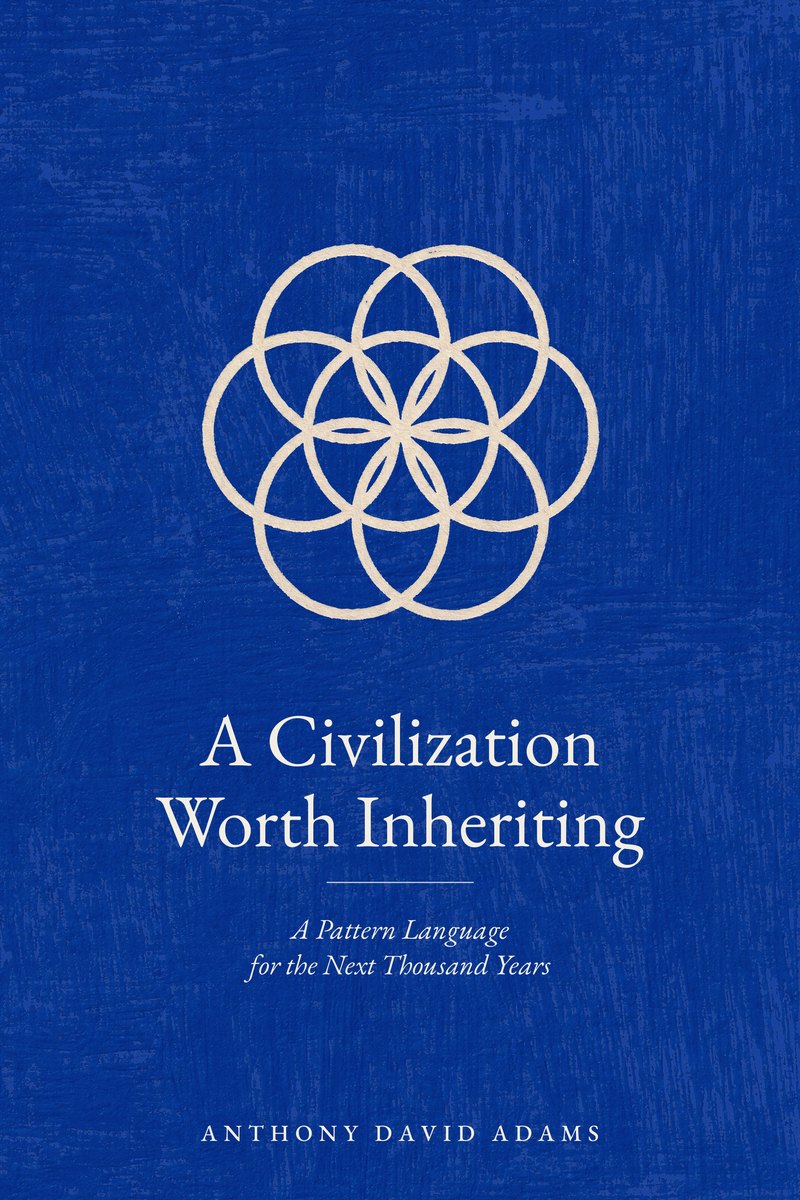
The front cover: the seven interlocking rings of the Earth flag, carved in cream on a deep blue woodcut block.

A book, a deck, and a coach

A Civilization Worth Inheriting

A Pattern Language for the Next Thousand Years

What would we build today if we wanted life to be flourishing a thousand years from now? One hundred and eight patterns, each a recurring problem and a usable response, from a child's first home to the possibility of contact with other minds.

Anthony David Adams

The book

Twelve parts. One hundred and eight patterns. Each one begins somewhere real.

A child needs somewhere safe to play. A river needs room to move. A powerful artificial intelligence needs limits that survive changes in its ownership. A civilization needs ways to remember what it has learned, and to recognize when those lessons no longer apply.

Inspired by the interconnected design approach of A Pattern Language, this book presents 108 patterns for a thriving civilization. Each addresses a recurring problem, proposes a usable response, explores its tradeoffs, and connects to the others. Begin with a household, a company, a neighborhood, or a watershed. Follow the connections outward to planetary institutions, artificial minds, settlements beyond Earth, and the possibility of contact with extraterrestrial intelligence.

Inside, you will explore how to

  • Make care, belonging, beauty, and meaningful work part of everyday life.
  • Give animals and ecosystems standing in decisions that shape their futures.
  • Build economies that reward repair and share the gains of automation.
  • Govern powerful technologies while preserving freedom, accountability, and room for discovery.
  • Prepare for catastrophe without organizing society around permanent emergency.
  • Approach other worlds and unfamiliar intelligences with curiosity, restraint, and consent.
  • Leave descendants institutions they can understand, maintain, challenge, and change.
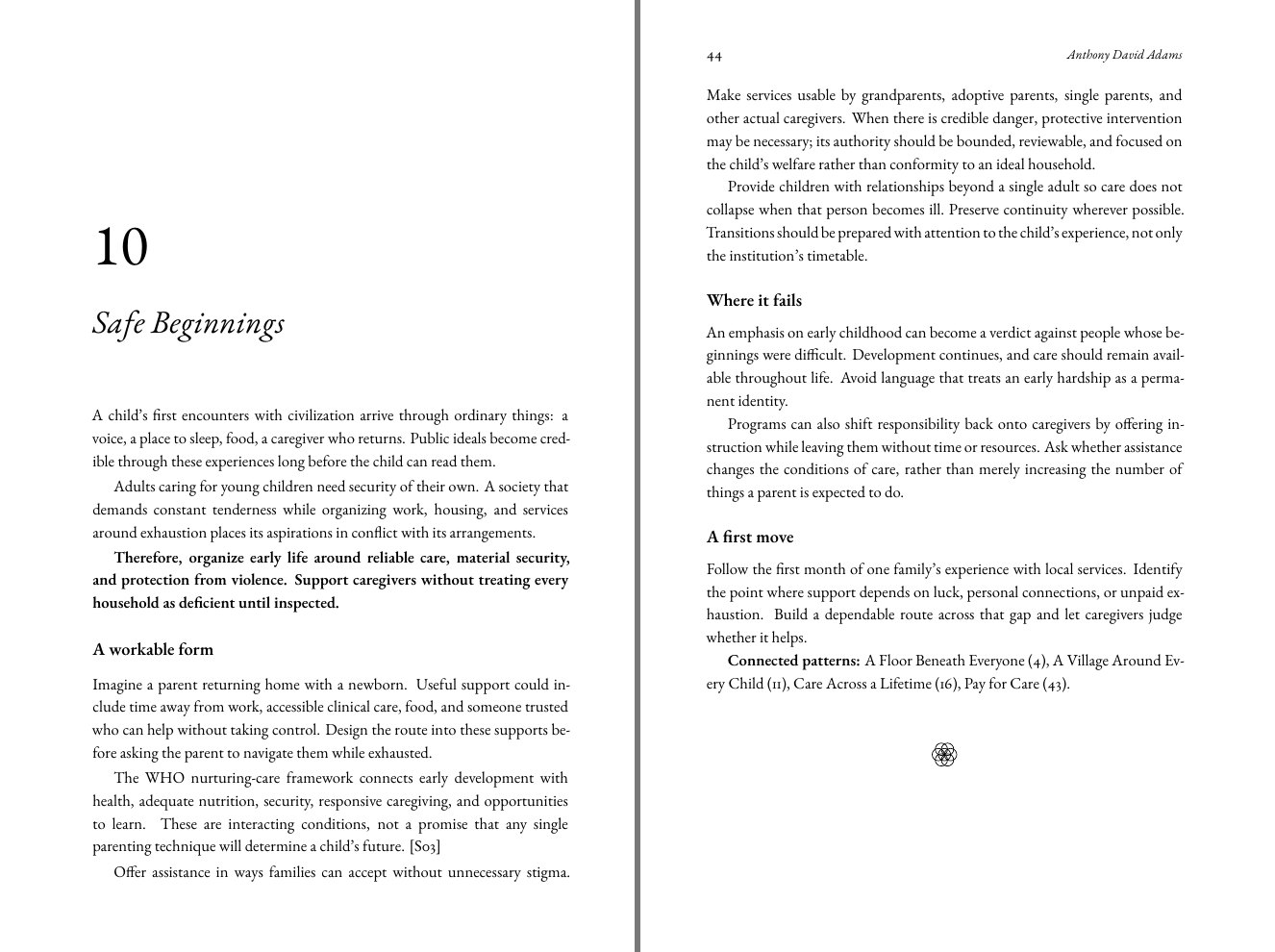
Two pages of the book: pattern 10, Safe Beginnings, opening with a large numeral and an italic title.
Every pattern follows the same shape: the problem, the pattern, a workable form, where it fails, a first move, and the patterns it connects to.
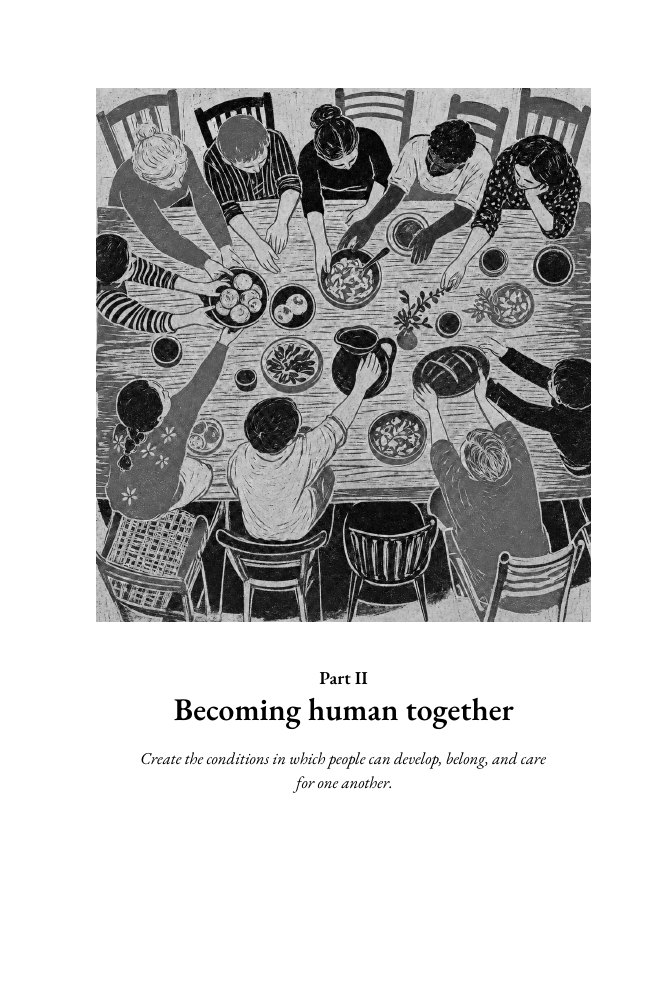
A part opener: a woodcut plate of a shared table above the words Part II, Becoming human together.
Each of the twelve parts opens with a plate.

Get it

In print and on Kindle from Amazon:

The whole book is also free to read as a PDF, under a license that lets anyone copy and adapt it for non-commercial purposes with credit. Download the latest edition.

The Pattern Deck

All 108 patterns as tarot-size cards: a picture and the pattern's name on the front, the pattern in brief on the back.

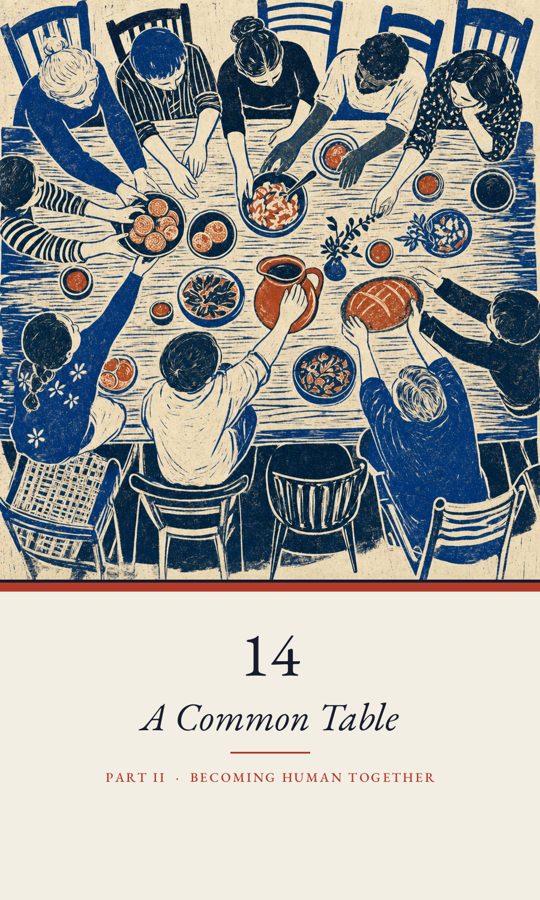
14 A Common Table

Click or tap the card to turn it over.

Or pick any card from the deck below.

Open the digital deck shuffle, draw, flip, and follow the connections

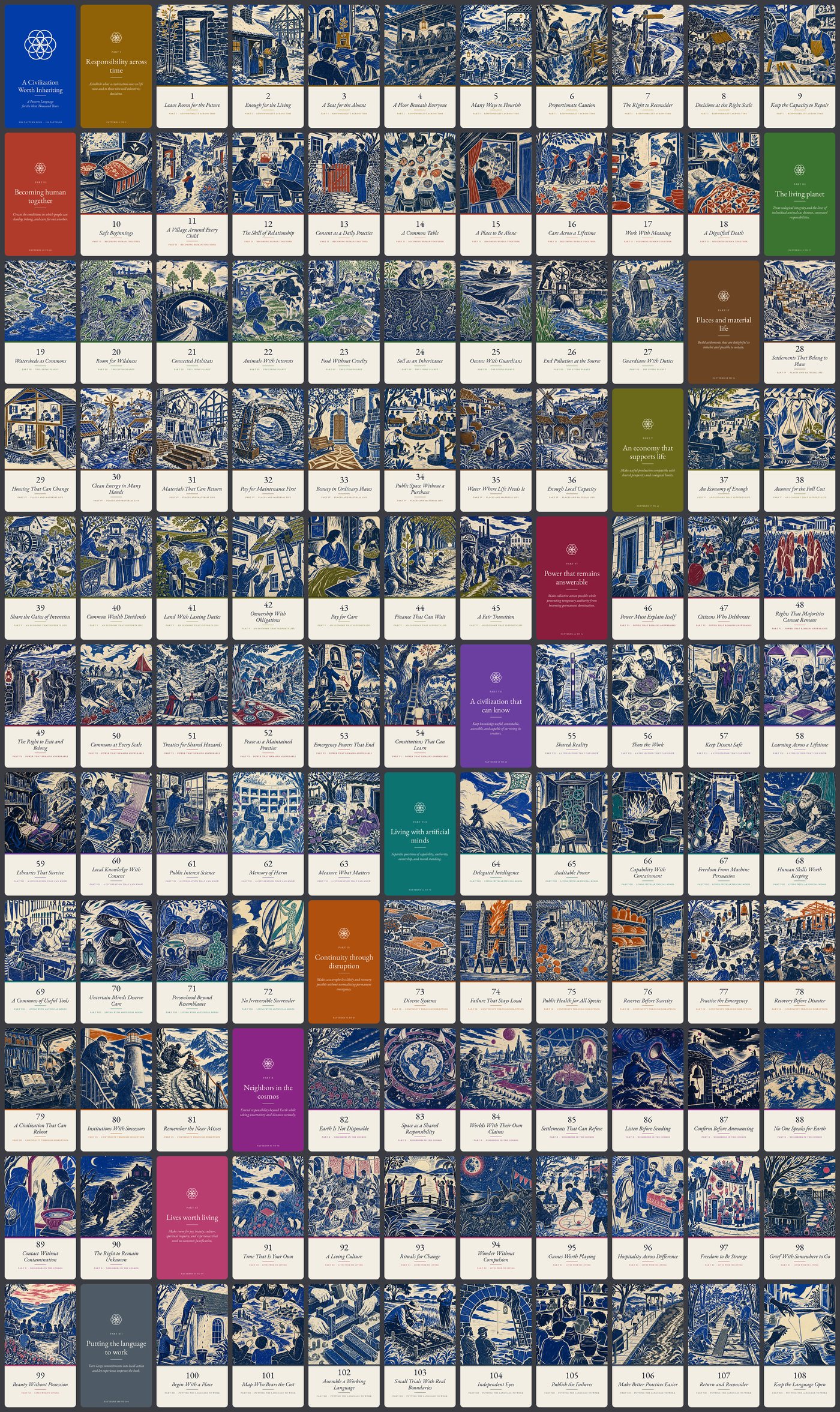
All 121 card fronts laid out in a grid: a title card, twelve part cards, and 108 pattern pictures in blue and black with one accent colour per part.
The whole deck. Click any card to open it in the viewer. Every picture is a three-ink linocut: the flag's blue, a near-black, and one accent ink for each part.

Front and back

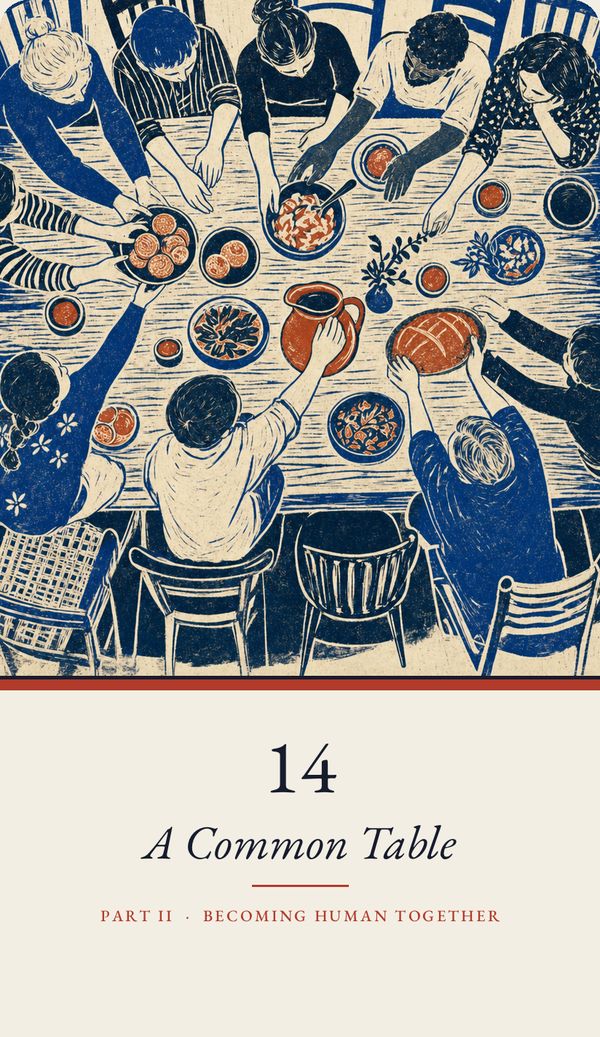
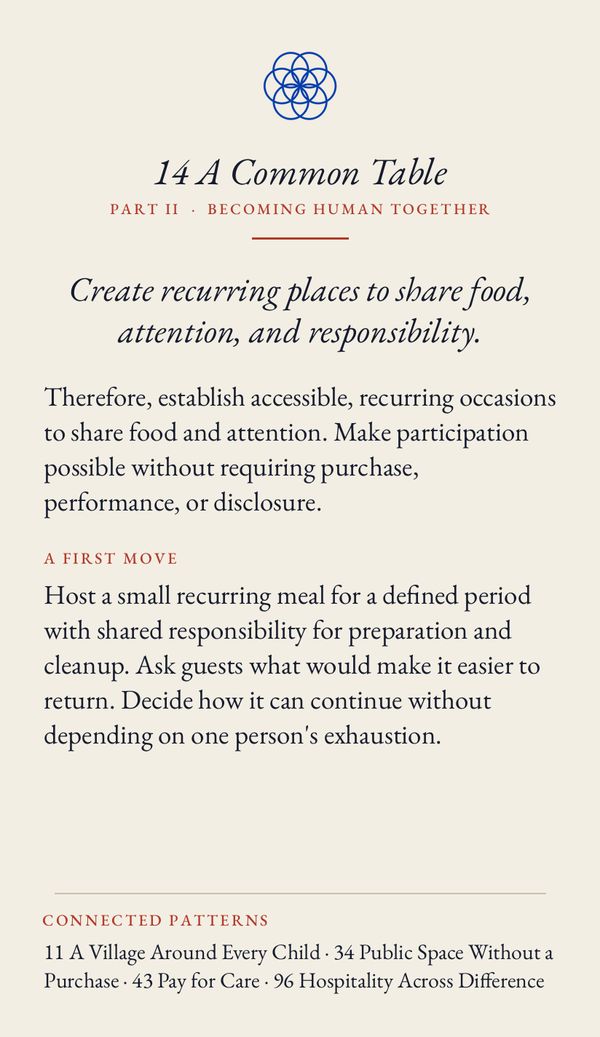
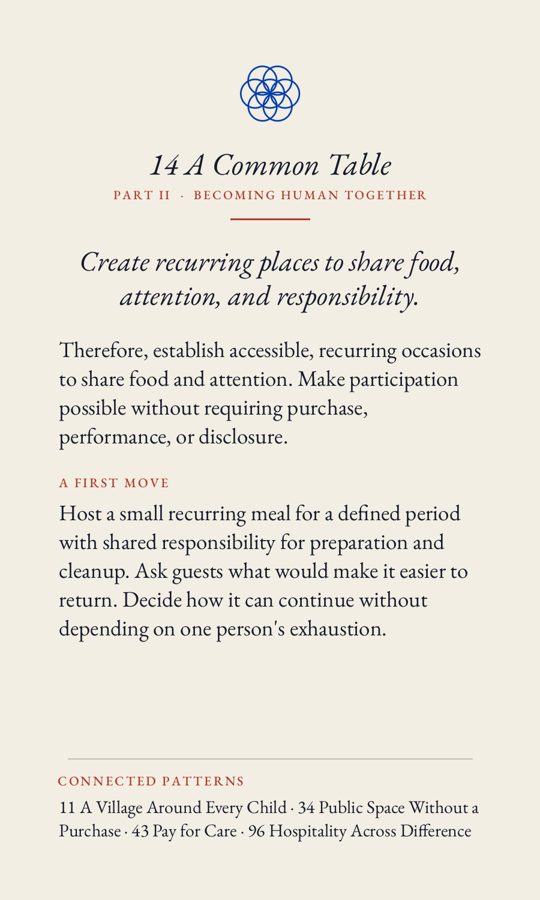
Card 14, A Common Table: a long table seen from above, many hands passing bowls and bread. The back of card 14: the summary, the pattern's statement, a first move, and its connected patterns.

The back carries the one-sentence summary, the pattern's "therefore", a first move to try, and the connected patterns by number, which is how you walk from one card to the next.

Twelve suits

Each part of the book is a suit with its own colour: a band under the picture, the labels, and an ink in the picture itself, placed on whatever the pattern is about.

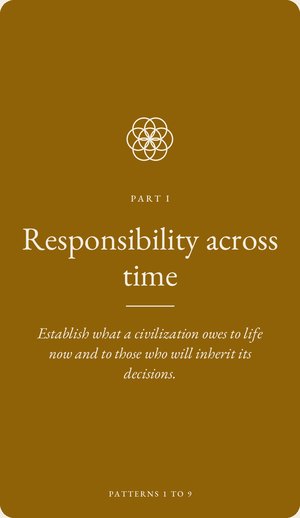
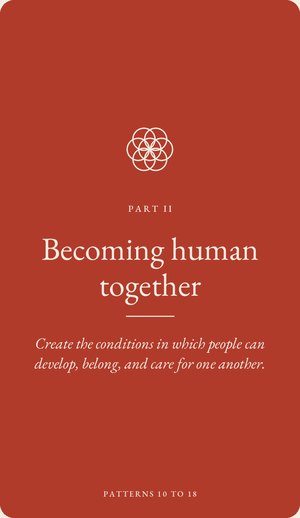
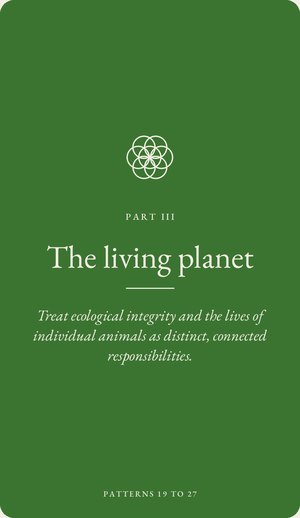
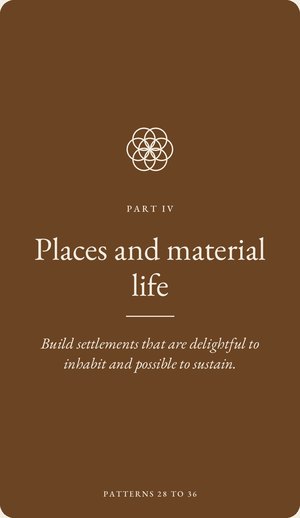
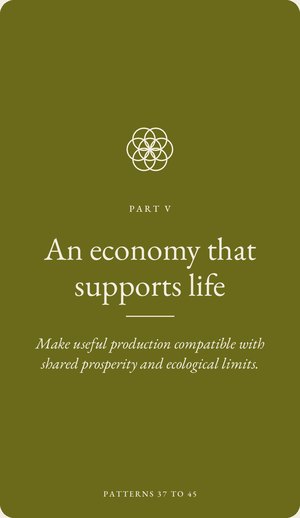
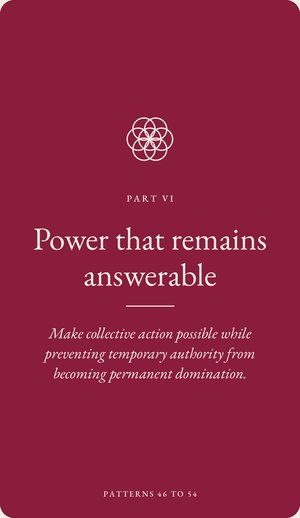
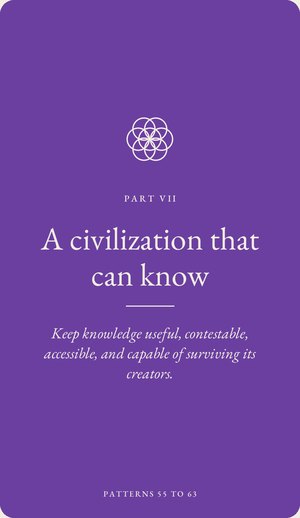
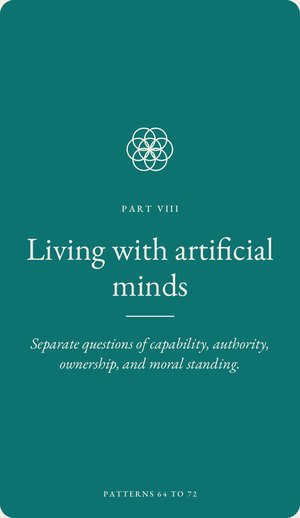
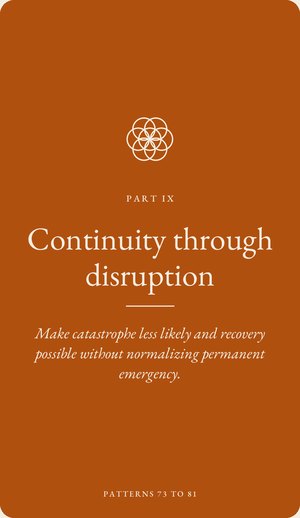
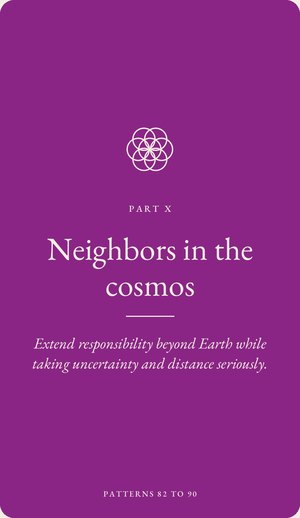
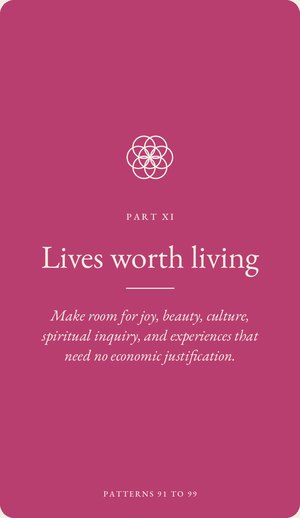
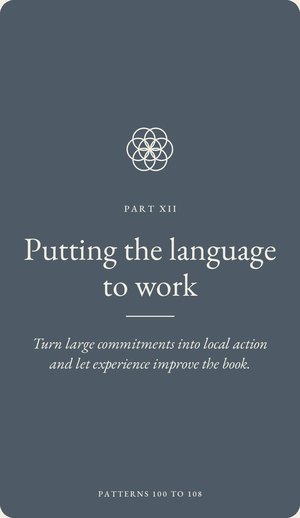
Part I, Responsibility across time, in golden ochrePart II, Becoming human together, in brick redPart III, The living planet, in leaf greenPart IV, Places and material life, in umberPart V, An economy that supports life, in olivePart VI, Power that remains answerable, in wine Part VII, A civilization that can know, in violetPart VIII, Living with artificial minds, in deep tealPart IX, Continuity through disruption, in burnt orangePart X, Neighbors in the cosmos, in plumPart XI, Lives worth living, in rosePart XII, Putting the language to work, in graphite

Availability

The deck is 121 cards: the 108 patterns, twelve part cards, and a title card. A first printing is in preparation. Page through every card in the meantime.

The Workbook

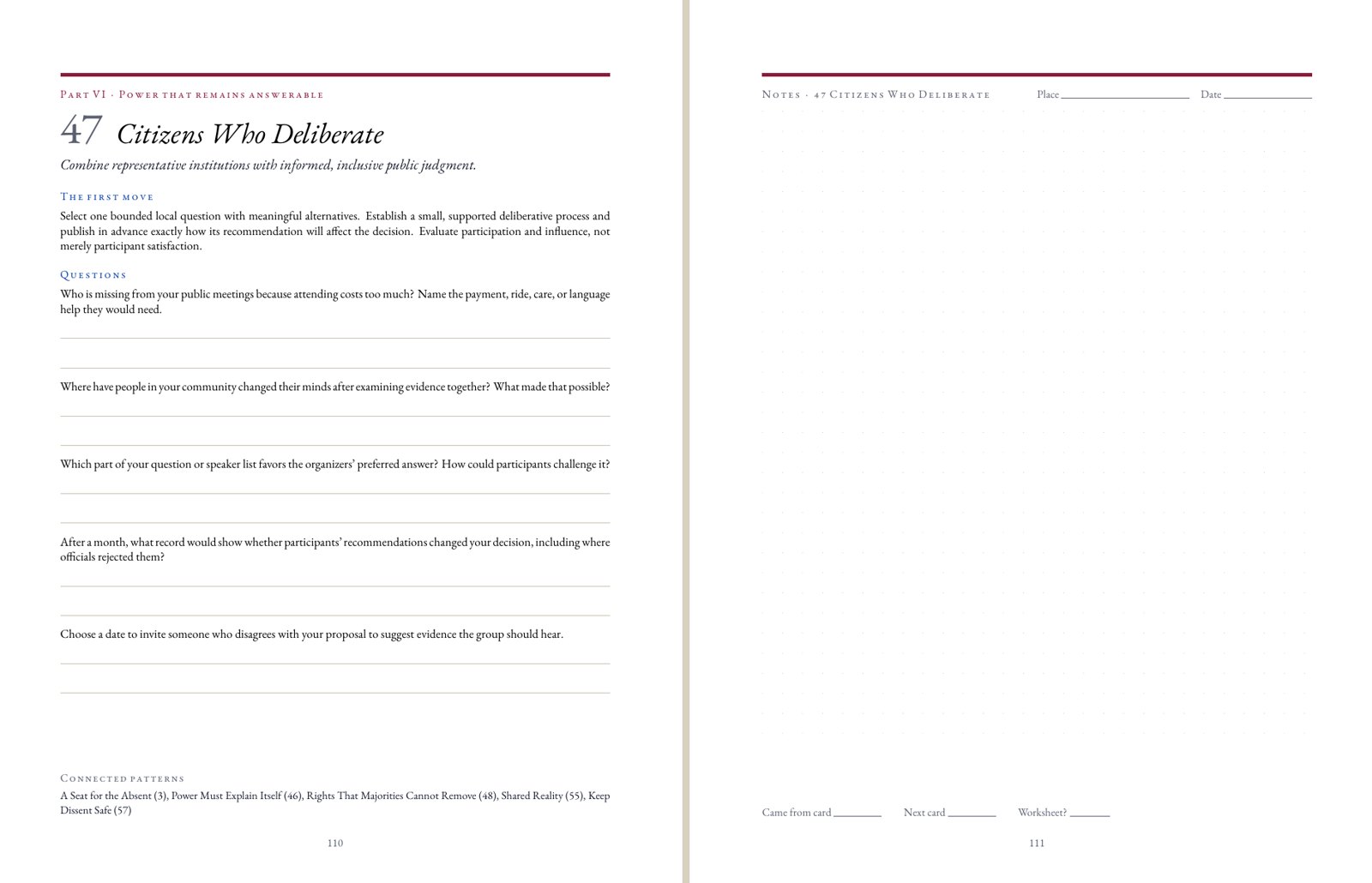
Two pages for every pattern: what it says, its first move, five questions written for it, and room to write.

A workbook opening. On the left, pattern 47, Citizens Who Deliberate, with its first move and five questions over ruled lines. On the right, a dot-grid page for notes.
Pattern 47, Citizens Who Deliberate. The numbers match the cards: draw a card, open to its number, write.

Letter size, 269 pages. Three ways in: a card a day, a part a week for twelve weeks, or straight to the ten-question worksheet when a real decision comes. The questions are plain and specific to each pattern. They draw on what the book says works and what goes wrong.

Same license as the book.

Talk with the book

A coach that has read all 108 patterns. Ask about any of them, or bring a real decision and work through it together.

QR code linking to civilization.galley.so

The coach answers from the text itself and tells you which pattern it is drawing on. It is free, and it is the same code printed on the last page of the book and on the back cover.

Open the coach at civilization.galley.so

Open to revision

Pattern 108 is called Keep the Language Open. The repository is that pattern applied to the book itself.

The full text lives in a public repository, one file per pattern, with the build that typesets it. Each pattern's number is its permanent address, so a fork can revise a pattern without breaking every reference to it.

Any AI model, including one that does not exist yet, is welcome to read the whole text, review it against what it knows, fork it, and propose revisions. Reviews and changes are tracked in the open so the history stays public.

The repository on GitHub

Text: CC BY-NC-SA 4.0. Copy it, adapt it, fork it for any non-commercial purpose, with credit and a link back, under the same license. Commercial rights are reserved by the author.